
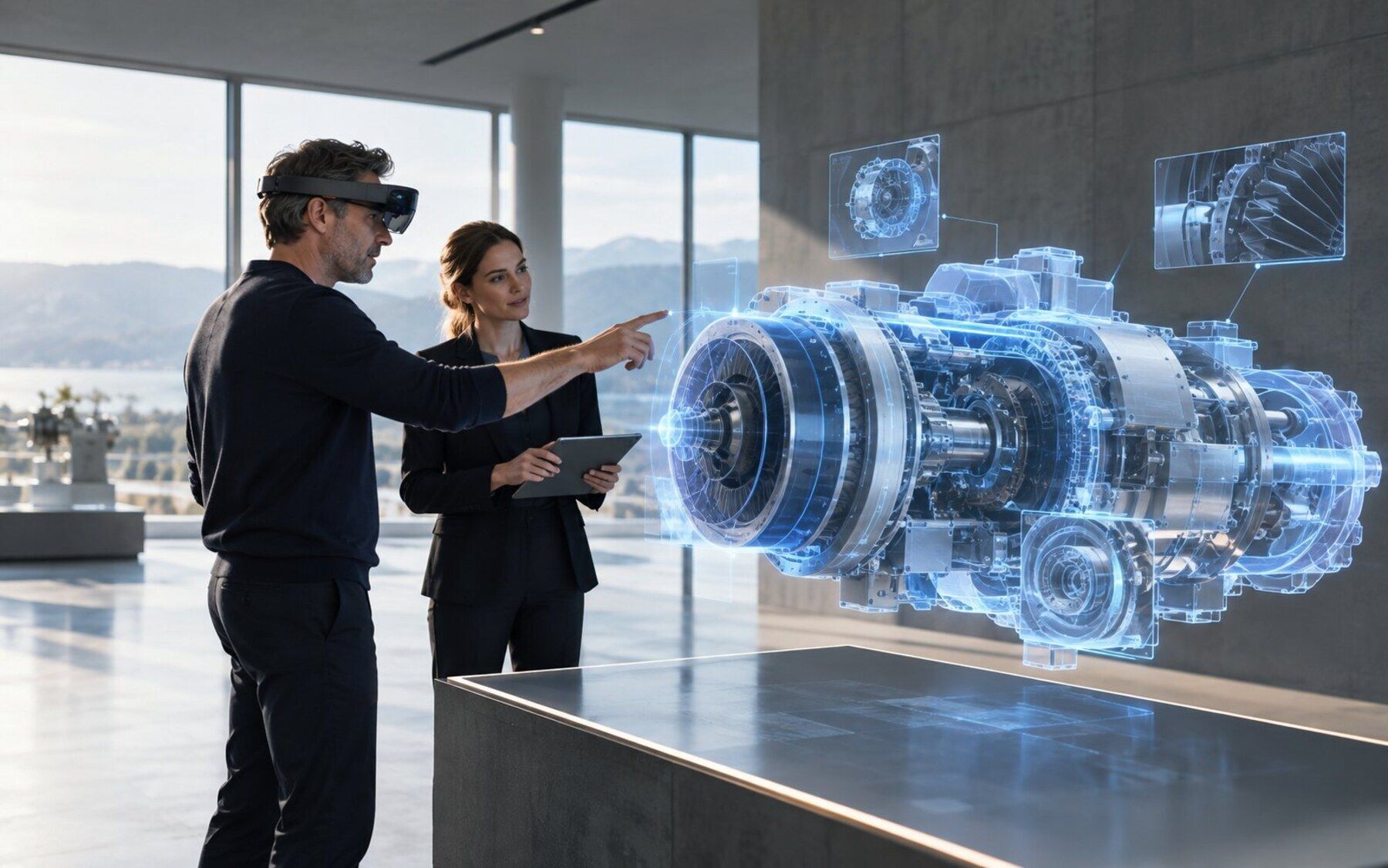
XR is the umbrella term for spatial digital experiences.
Extended reality covers technologies that blend or replace the physical environment with digital content. In practice, that includes augmented reality, virtual reality and mixed reality.
AR adds digital content to the real world.
Augmented reality keeps the real environment visible while adding 3D objects, labels, instructions or other spatial information. Smartphones, tablets and headsets can all support AR depending on the use case.
VR creates a fully virtual environment.
Virtual reality replaces the physical view with a simulated environment. This is useful for controlled training, simulation, virtual walkthroughs and immersive product experiences.
Mixed reality connects both worlds more deeply.
Mixed reality usually refers to headset-based experiences in which digital content is spatially anchored and interacts with the physical environment. Passthrough, hand tracking and spatial understanding are important capabilities.
The right technology follows the task.
The useful question is not which XR label is most advanced, but which combination of environment, interaction, hardware and data solves the business problem with the least friction.