

Advanced XR solutions. Clear business value.
XR applications
for business.
Make products, processes and knowledge easier to understand through immersive spatial experiences.
We develop custom XR applications — from virtual and augmented reality to mixed reality, 3D visualization and interactive training. For industry, learning, sales, culture and planning.
Cross-industry applications
XR solutions for concrete use cases
Industry & Mechanical Engineering
Make machines, processes and operational data easier to understand in a spatial context.
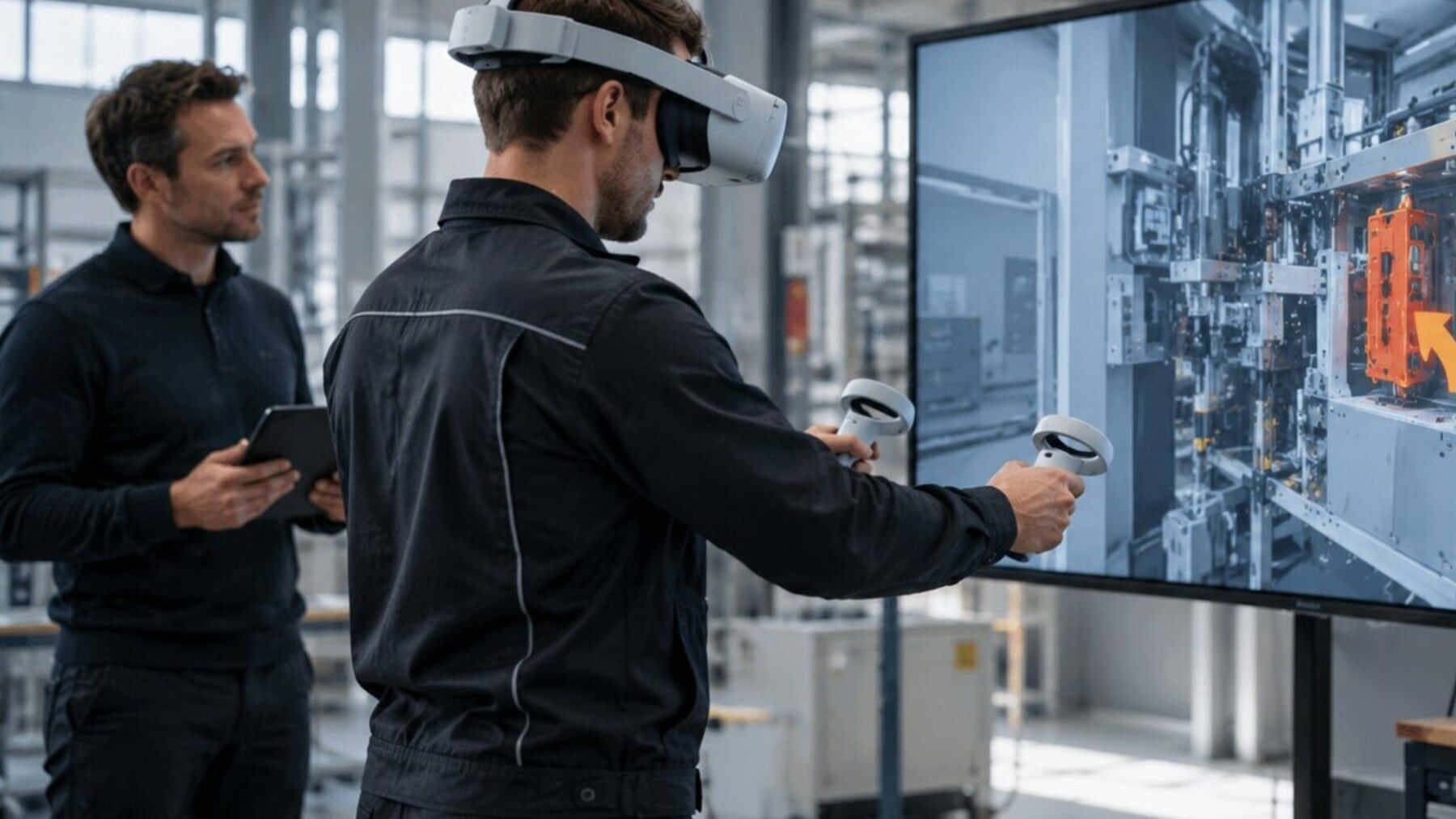
VR Training & Workplace Safety
Practice hazardous, expensive or rare situations in repeatable virtual scenarios.
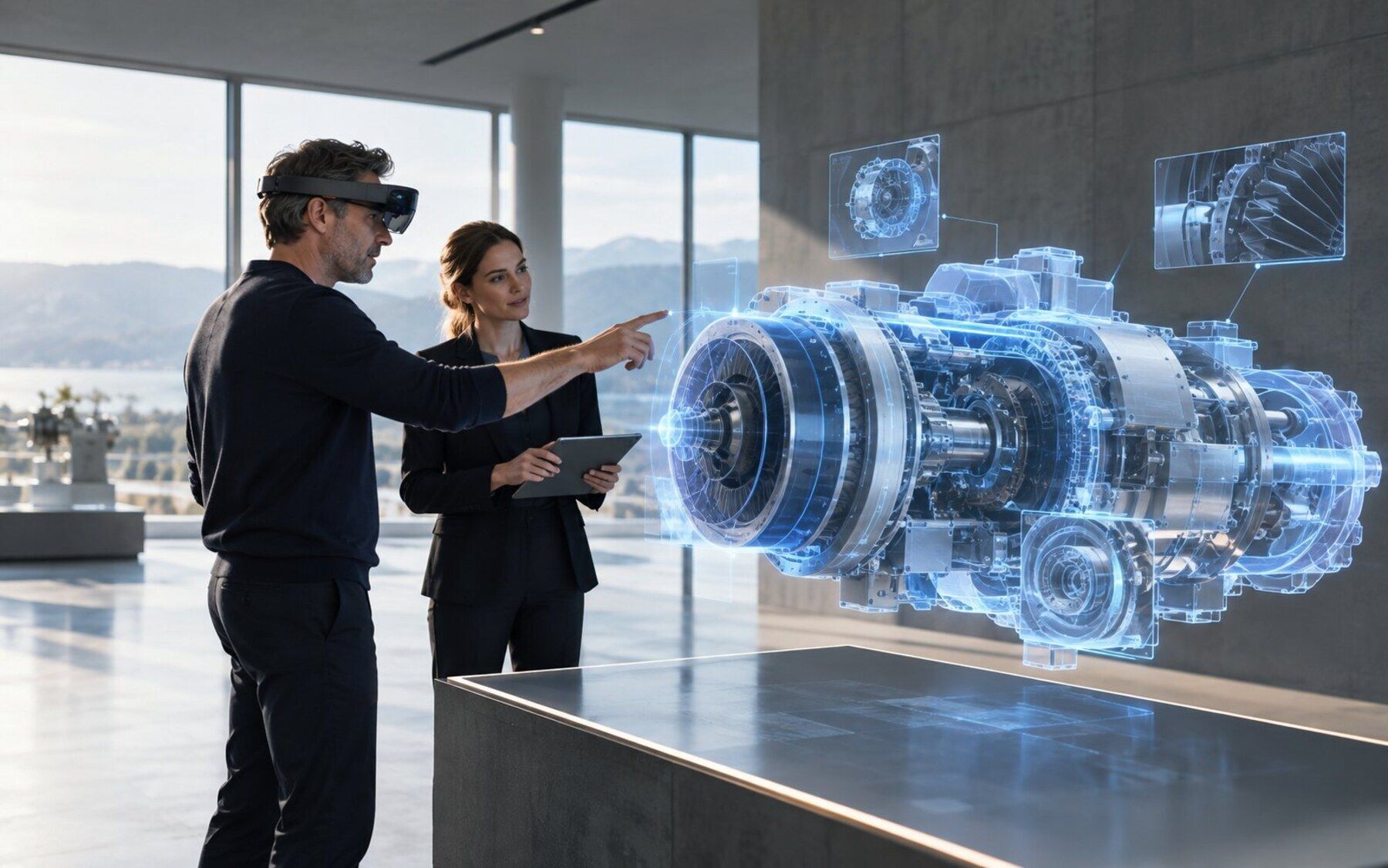
Sales & Product Presentation
Explain large, complex or configurable products through interactive spatial experiences.
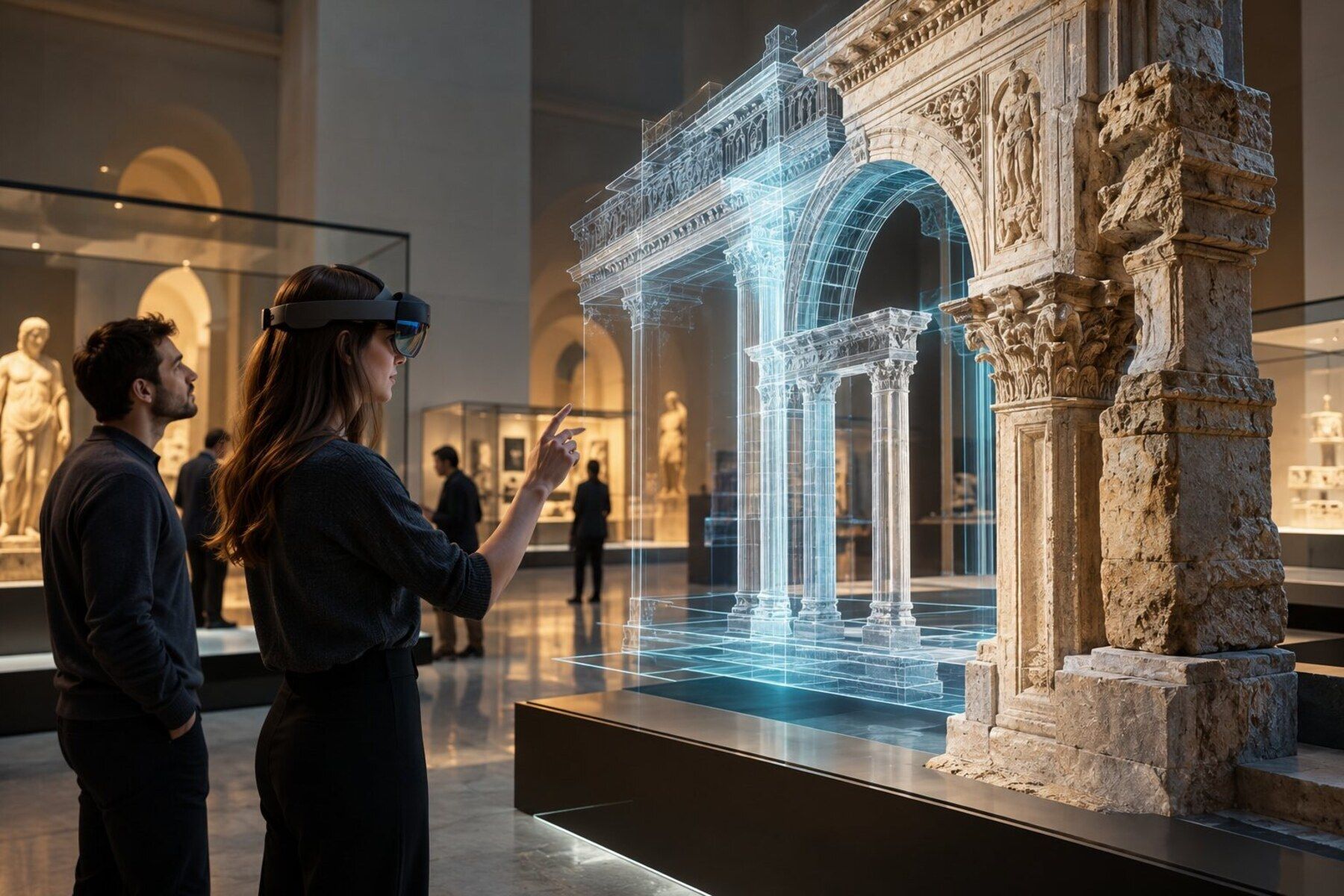
Museums, Culture & Tourism
Extend places and exhibits with spatial storytelling, reconstructions and interactive content.
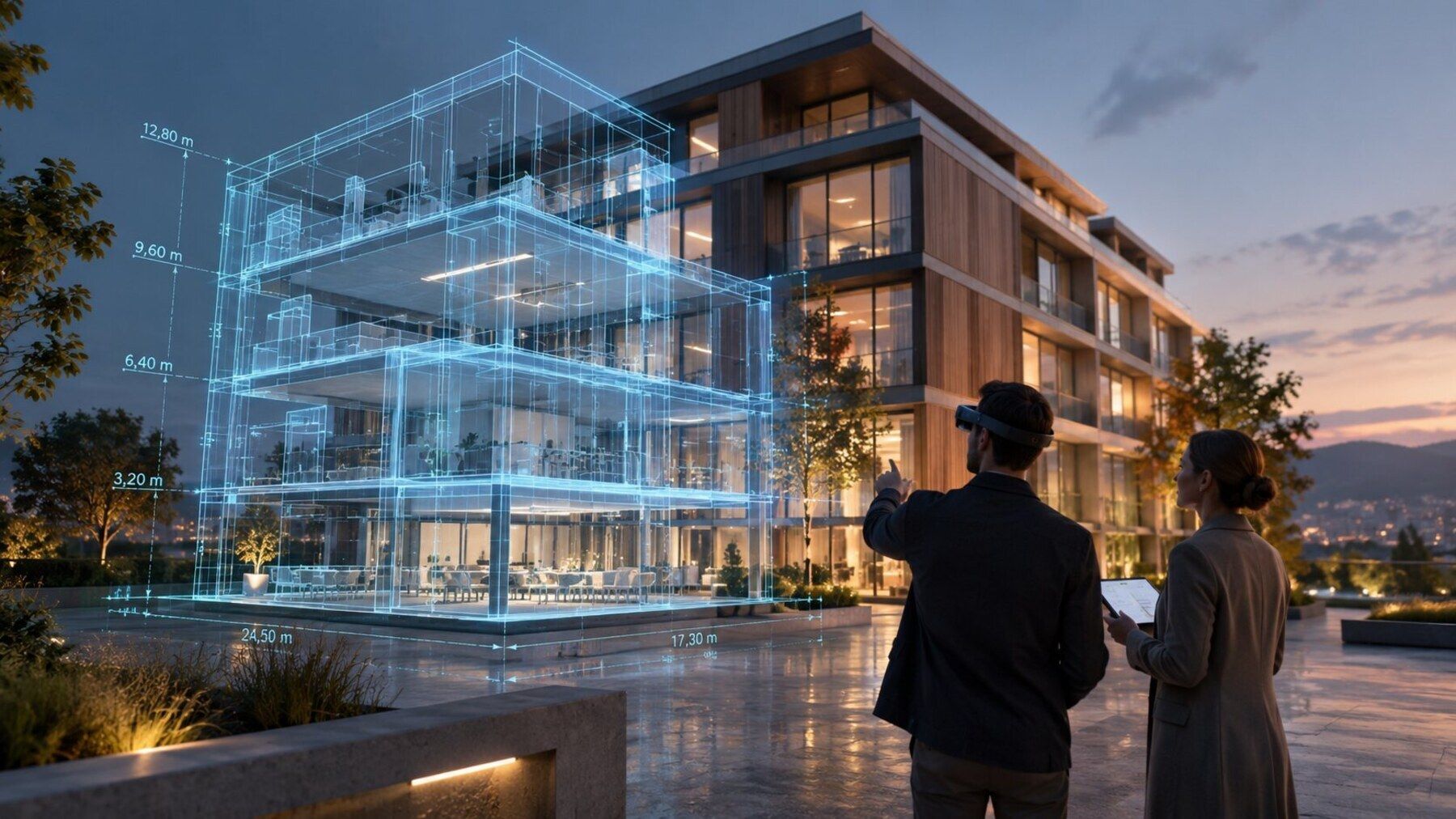
Architecture & Real Estate
Experience buildings and spaces before construction and compare design decisions spatially.
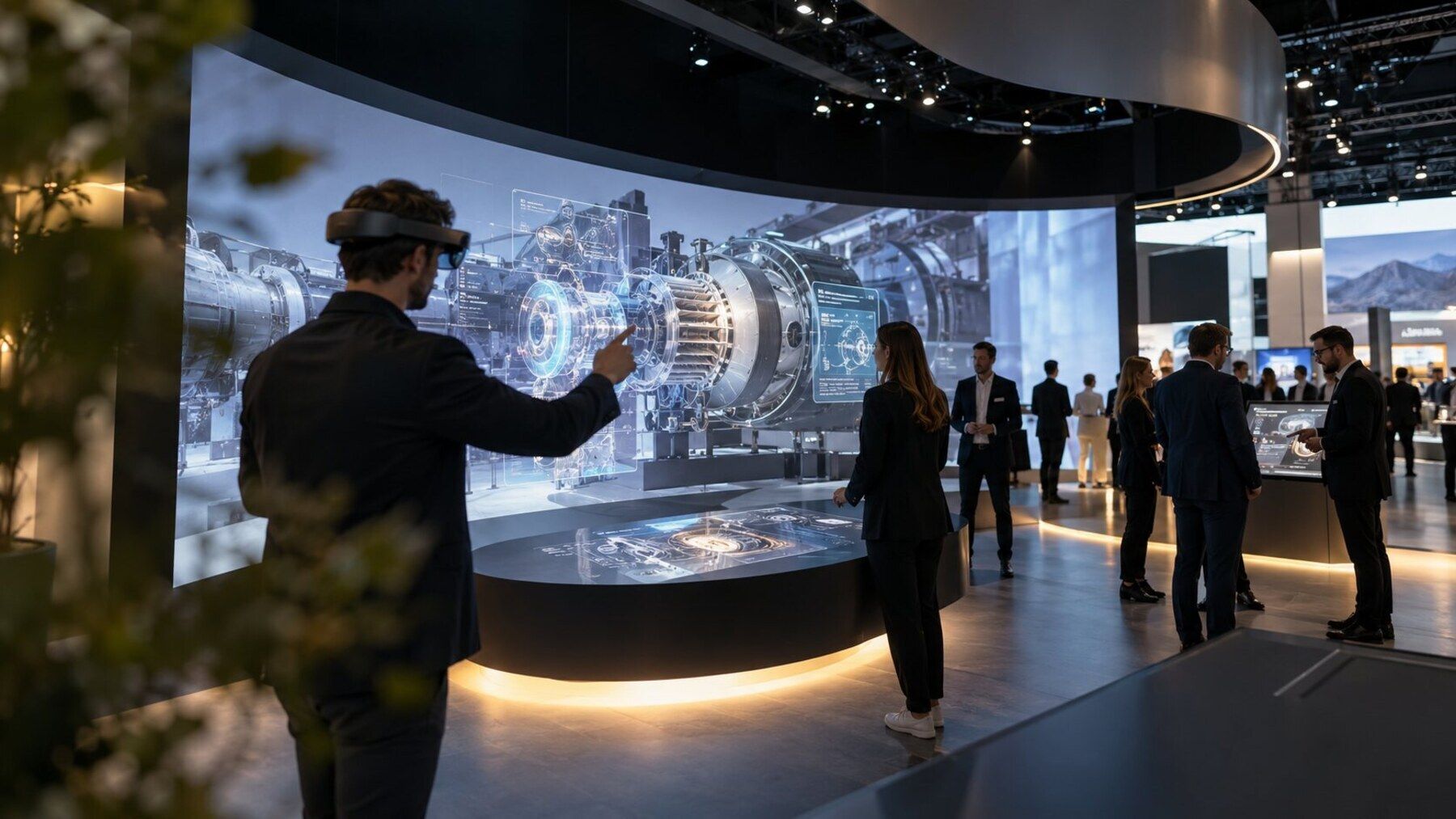
Trade Shows & Events
Create interactive product worlds and experiences within limited physical booth space.
Our services
XR strategy, development and delivery
Strategy & concept
Validate use case, audience, hardware, data and integrations before committing to a build.
Development & integration
Place digital information and 3D content directly into real environments.
Operations & evolution
Immersive, controlled environments for training, simulation and presentation.
How we work
Four steps to a production-ready XR solution
Understand & assess
We clarify the challenge, users, objectives and constraints.
Design & plan
We define the right XR approach and a realistic implementation path.
Build & validate
We develop the solution and test it on representative target hardware.
Roll out & scale
We support deployment, operations and sustainable evolution.
Modern technology
Technologies & platforms
Practical XR scenarios
What XR projects can look like in practice
These scenarios illustrate typical project patterns. They are not customer references or performance claims.
Insights & guidance
XR knowledge for better decisions
What is Extended Reality (XR)?
A practical explanation of XR, AR, VR and mixed reality for business decision-makers.
AR vs. VR vs. Mixed Reality: Which Fits When?
Compare AR, VR and mixed reality by environment, interaction, hardware and business objective.
How Much Does an XR Application Cost?
Understand the factors that drive XR budgets: scope, 3D content, interaction, hardware, integration, testing and operations.
Frequently asked questions
Quick answers to important XR questions
Which businesses benefit most from XR?
XR is particularly useful when spatial relationships, physical tasks, large products or real environments matter. Whether AR, VR or mixed reality is the best fit depends on the workflow.
How much does an XR application cost?
Budget depends on 3D data, interaction, target hardware, integrations, quality level and rollout. A focused proof of concept can validate the critical assumptions early.
How long does an XR project take?
That depends on scope. A prototype can move quickly, while a production system with data integration, device fleets and rollout requires more planning and validation.
Can existing systems be integrated?
Yes, when suitable APIs or other reliable interfaces are available. Data models, permissions, latency and offline requirements should be reviewed early.
Which hardware do we need?
That follows from the use case. Options include smartphones and tablets, standalone headsets, spatial-computing devices and PC-connected systems.
Do you also support rollout and operations?
Yes. Deployment, device management, updates, kiosk operation and support can be planned as part of a production-ready solution.
Your XR project
Let’s discuss what XR should achieve for your business.
Practical, focused and grounded in your actual users, data and operating environment.