
VR development

Virtual reality for training, simulation and immersive presentation.

VR creates repeatable scenarios in a fully virtual environment. It is especially useful when real-world training is dangerous, expensive, rare or difficult to standardize.

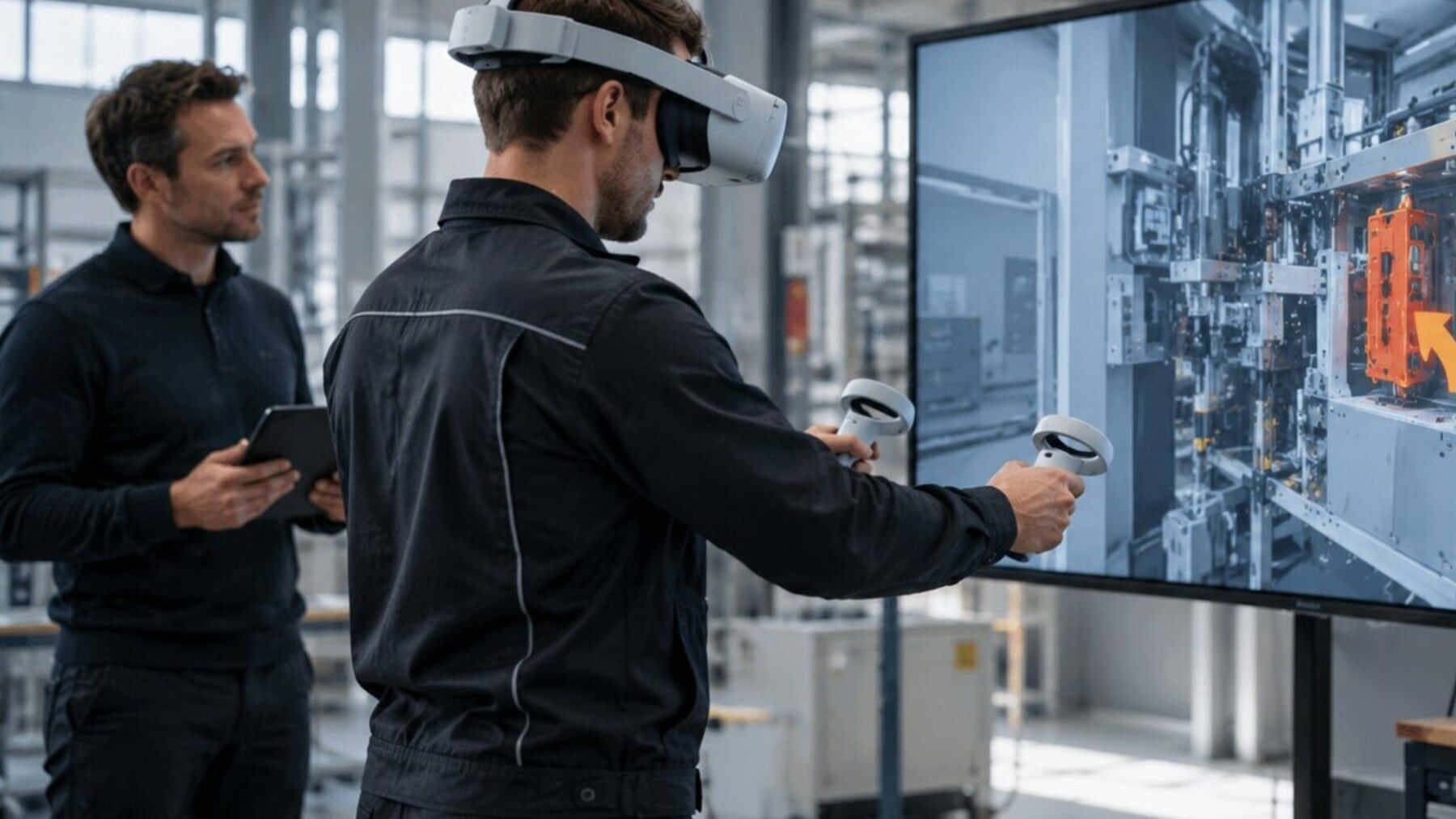
Employee completing a VR training scenario for an industrial assembly process
01Use case before hardware
02Review 3D and data early
03Test on target hardware
04Plan rollout and operations

Starting points

When this approach makes sense

  • Real training is dangerous, expensive or infrequent
  • Complex products are difficult to make physically available
  • Processes need repeatable and standardized practice
  • Spaces or equipment should be experienced before they exist

Deliverables

What we build

  • Scenario and training design
  • Interactive VR application
  • 3D environment and assets
  • Evaluation, deployment and device concept

Use cases

Concrete applications instead of XR for its own sake.

The right implementation depends on audience, environment, data, hardware and the integrations required.

01

Machine operation training

02

Safety and hazard scenarios

03

Fire and evacuation training

04

Virtual product showrooms

05

Virtual walkthroughs

06

Prototyping and design reviews

Decision criteria

The key questions before starting the project.

Clear technical and operational assumptions make the difference between a compelling prototype and a production-ready solution.

  • What learning or decision objective should be achieved?
  • Is room-scale movement or seated use planned?
  • Which input method best fits the task?
  • How should progress or performance be evaluated?

Quality & operations

What makes an XR solution reliable in production.

Performance, usability and maintainability are evaluated together instead of being postponed until rollout.

  • Test on representative target hardware and in realistic environments
  • Document technical limits, dependencies and fallback paths
  • Optimize 3D content for performance and maintainability
  • Plan deployment, updates and operational ownership from the start

Frequently asked questions

Questions about Virtual Reality Development.

Answers to common questions before an XR project.

What makes VR training effective?

Good learning design, realistic tasks, clear feedback and appropriate evaluation. Immersion alone does not guarantee learning outcomes.

Can VR sessions be evaluated?

Yes. Depending on the project, interactions, decisions, sequence, timing and selected events can be recorded and assessed.

Does VR always require a powerful PC?

No. Many business scenarios can run on standalone headsets. High-end rendering or specialist applications may still benefit from PC-connected systems.

Clarify whether Virtual Reality Development fits your project.

We review use case, data, target hardware, integrations and rollout requirements together — before unnecessary implementation effort is created.