
Mixed reality

Mixed reality and spatial computing for real working environments.

Mixed reality keeps the physical environment visible while anchoring digital content in space. This supports guided work, spatial visualization, collaborative reviews and high-value presentations.

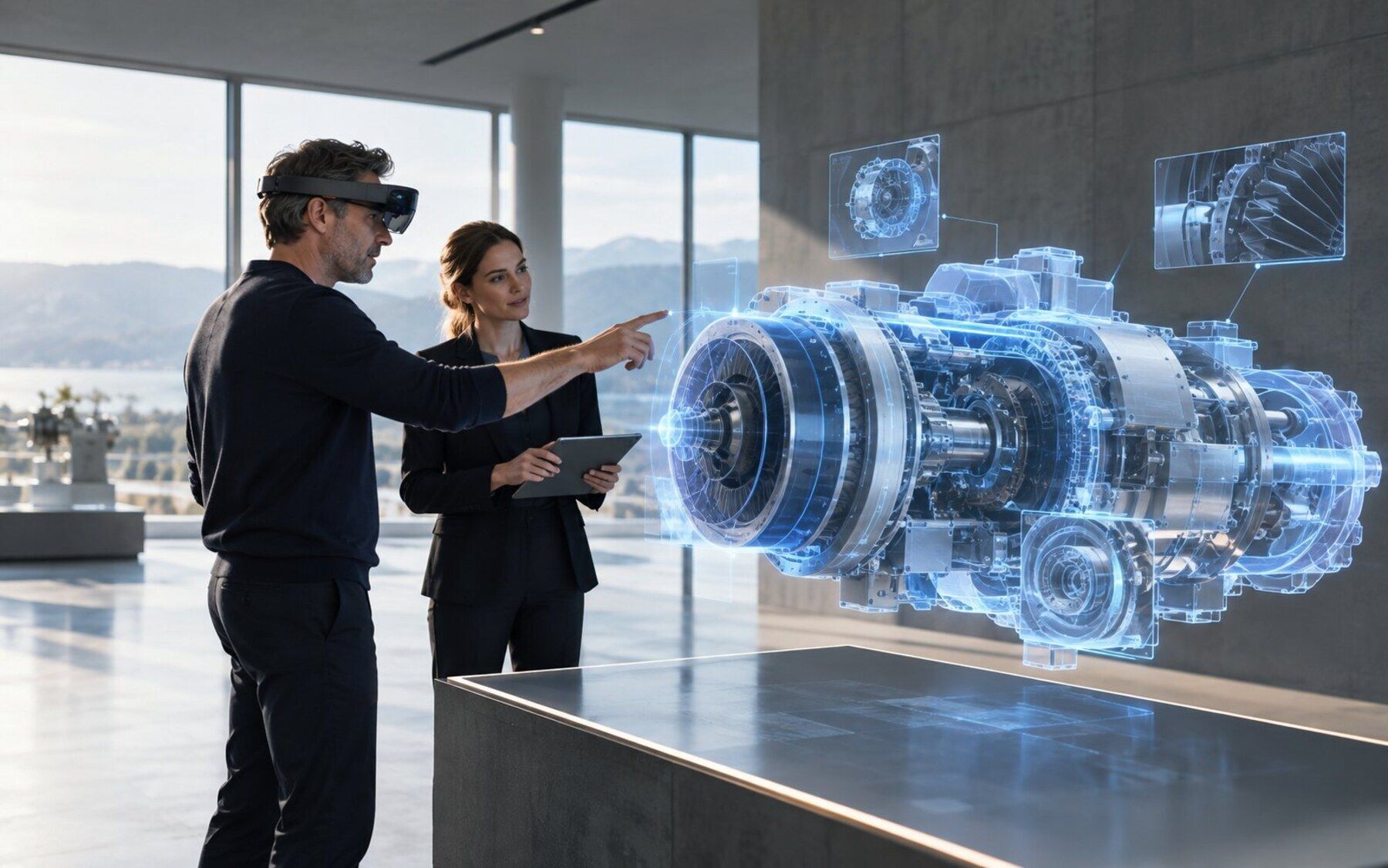
Spatial 3D product presentation of a complex industrial machine
01Use case before hardware
02Review 3D and data early
03Test on target hardware
04Plan rollout and operations

Starting points

When this approach makes sense

  • Digital instructions need to remain connected to a physical workplace
  • Teams need to review 3D content in a shared spatial context
  • Physical products should be enhanced with interactive information
  • Hands-free workflows require spatial interfaces

Deliverables

What we build

  • Spatial UX and interaction concept
  • Passthrough and hand-tracking implementation
  • Anchors and spatial placement
  • Device validation and enterprise deployment

Use cases

Concrete applications instead of XR for its own sake.

The right implementation depends on audience, environment, data, hardware and the integrations required.

01

Guided work and assembly

02

Spatial product reviews

03

Mixed-reality training

04

Design and engineering reviews

05

Interactive customer presentations

06

Collaborative spatial sessions

Decision criteria

The key questions before starting the project.

Clear technical and operational assumptions make the difference between a compelling prototype and a production-ready solution.

  • How much of the physical environment must remain visible?
  • Which objects need reliable spatial anchoring?
  • How important are hand tracking and passthrough quality?
  • Will multiple users need synchronized content?

Quality & operations

What makes an XR solution reliable in production.

Performance, usability and maintainability are evaluated together instead of being postponed until rollout.

  • Test on representative target hardware and in realistic environments
  • Document technical limits, dependencies and fallback paths
  • Optimize 3D content for performance and maintainability
  • Plan deployment, updates and operational ownership from the start

Frequently asked questions

Questions about Mixed Reality & Spatial Computing.

Answers to common questions before an XR project.

When is mixed reality preferable to VR?

When users need to keep seeing the real environment, interact with physical objects or combine digital guidance with a real workspace.

What is spatial computing?

It is a broad term for computing interfaces that understand and use three-dimensional space, including mixed-reality headsets and spatial interaction.

Can several users share the same spatial experience?

Yes, when synchronization, networking and spatial alignment are designed for the specific platform and environment.

Clarify whether Mixed Reality & Spatial Computing fits your project.

We review use case, data, target hardware, integrations and rollout requirements together — before unnecessary implementation effort is created.