
Starting points
When this approach makes sense
- Real exercises are risky or disruptive
- Rare incidents are difficult to train consistently
- Onboarding quality varies between trainers and locations
- Learning progress needs more transparency
Training & safety
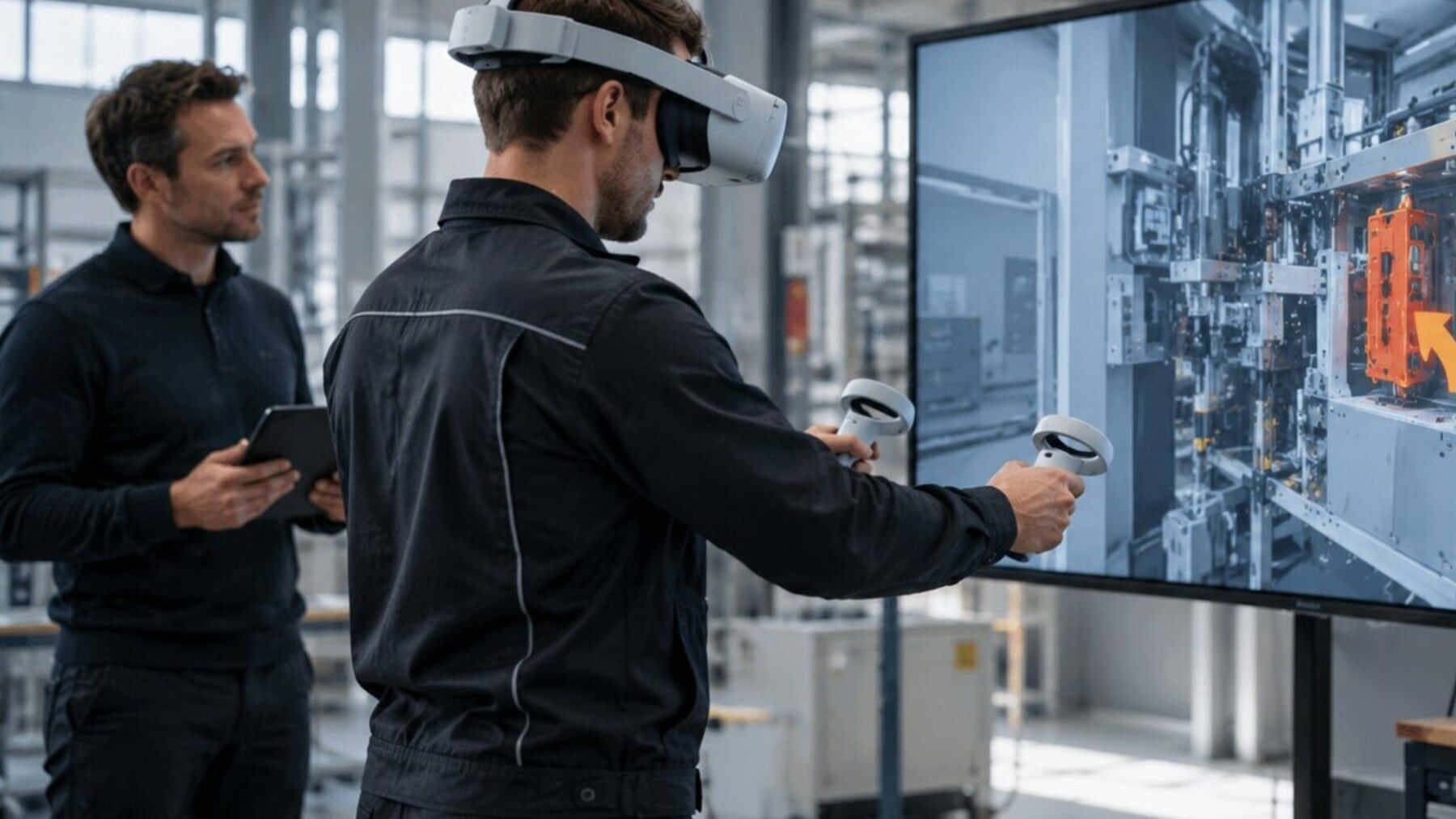
Virtual reality makes it possible to practice procedures, decisions and safety-critical situations in a controlled environment. Scenarios can be repeated, standardized and evaluated without exposing people or equipment to unnecessary risk.
Starting points
Deliverables
Use cases
The right implementation depends on audience, environment, data, hardware and the integrations required.
Decision criteria
Clear technical and operational assumptions make the difference between a compelling prototype and a production-ready solution.
Quality & operations
Performance, usability and maintainability are evaluated together instead of being postponed until rollout.
Next step
Feasibility, platform choice and rollout should be considered together.
Frequently asked questions
Answers to common questions before an XR project.
No. VR is strongest where it complements practical instruction, prepares learners for real tasks or enables scenarios that would otherwise be unsafe or impractical.
Yes. Scenarios, difficulty, language and evaluation can be structured for different user groups when required.
Through appropriate locomotion, stable frame rates, comfortable interaction design and careful testing with the target audience.
We review use case, data, target hardware, integrations and rollout requirements together — before unnecessary implementation effort is created.